Limo Green Private Limited · Mumbai, India ← CIN U49224MH2026PTC466060 a Smart Mobility Managment Consultancy
Management Consultancy · EV & Smart Mobility

The niche advisory
for India's EV-mobility
economy.

We advise the platforms, fleets, and aggregators that move India — turning policy deadlines and market shifts into fleet, infrastructure, and operating strategy that works on the road, not just on a slide.

Why we're different

Limo Green Strategic Advisory is the consultancy arm of Limo Green Private Limited — the same group that helps fleet operators to operate 1,400+ electric vehicles on Indian roads today. Every framework we bring to a client engagement has already been run on our own fleet.

0
Client segments served
0
KM of operating data
0
India EV market, 2026 (USD)
0
EV market growth, YoY
Who We Serve

One consultancy, six client segments, one EV transition

Every operator moving people or parcels in India is being pulled through the same transition, on different timelines and different economics. We built a practice around each.

Segment 01

Smart mass-mobility & ride-hailing platforms

Delhi's EV Policy 2.0 and its state-level echoes are forcing ride-hailing and shared-mobility operators to retire ICE vehicles on fixed dates — 31 December 2026 for petrol two-wheelers, 1 January 2027 for three-wheelers — without handing them an execution plan. Driver economics, uptime, and charging access all move at once.

Who this is: city ride-hailing apps, corporate shuttle platforms, shared and pooled mobility operators.
  • Policy-linked compliance roadmapsPhased ICE-to-EV transition plans mapped to every mandate deadline that applies to your fleet.
  • Precision TCO modellingTotal cost of ownership built on 10.12M+ km of real driving data, not manufacturer brochures.
  • Driver transition & incentive designTraining and earnings structures that keep drivers whole through the switch to EV.
  • Platform architecture advisoryRide, driver, and dispatch platform design informed by our own five production apps.
Segment 02

Quick-commerce platforms

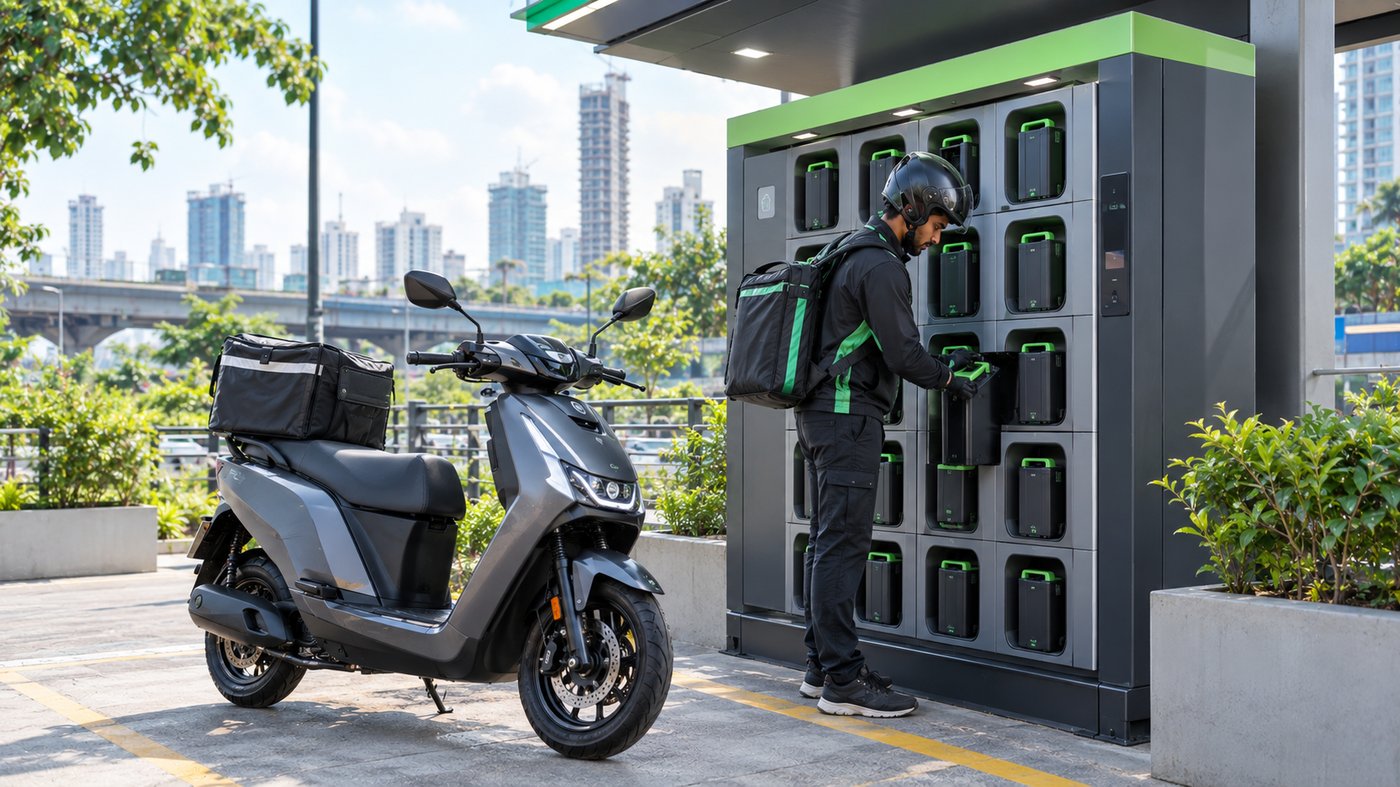
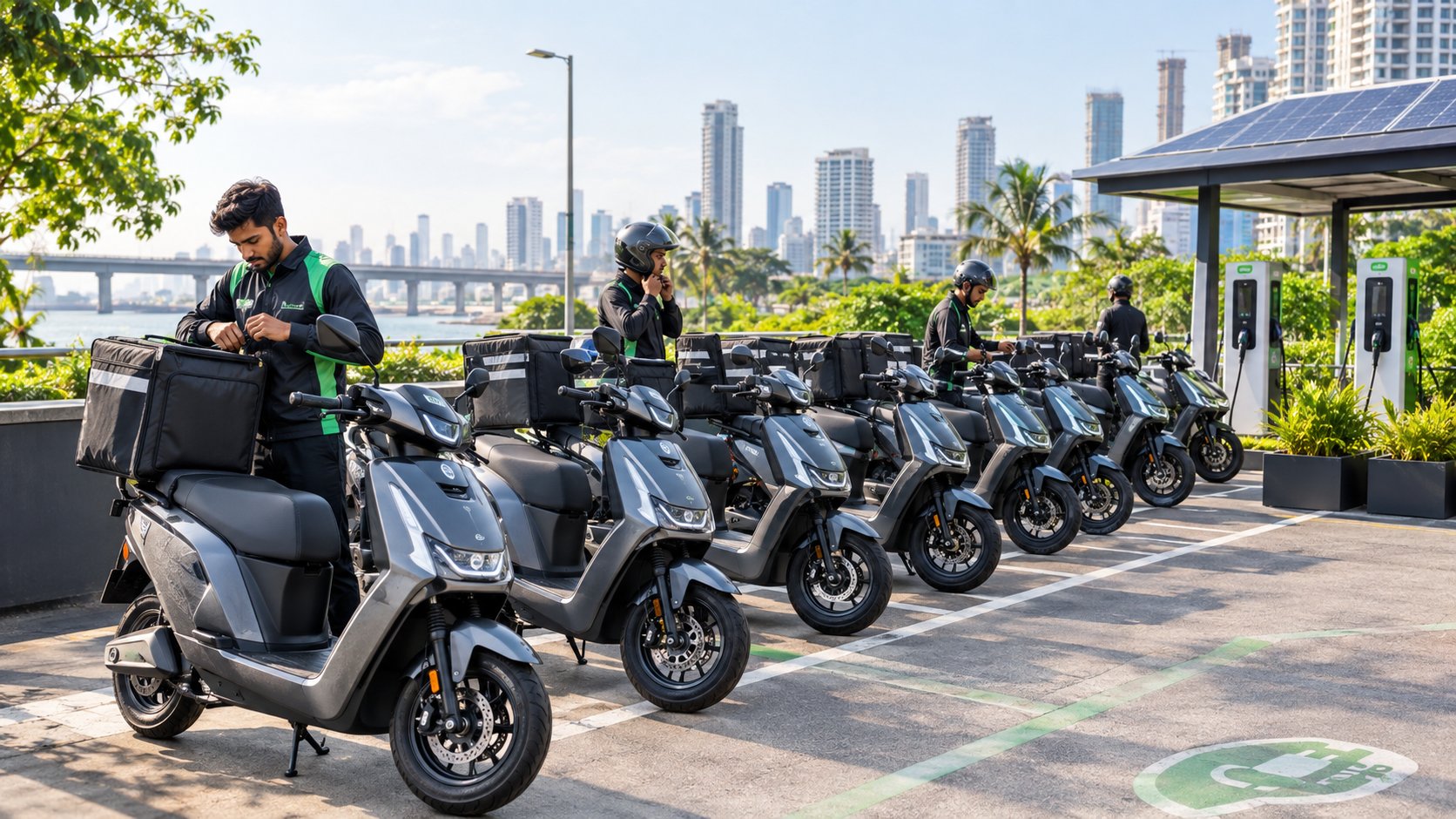
Ten- and fifteen-minute delivery economics leave almost no room for fuel-cost volatility or downtime — and the NCR mandate now requires every new vehicle added by delivery platforms to be EV or clean-fuel from 1 January 2026. Two- and three-wheeler electrification has to happen at hub density, not one vehicle at a time.

Who this is: dark-store and hyperlocal delivery networks, instant-grocery platforms, on-demand courier fleets.
  • Two/three-wheeler electrification sequencingWhich hubs convert first, and in what order, to protect delivery SLAs during the switch.
  • Dark-store & hub charging designCharger count, placement, and power contracts sized to real rider shift patterns.
  • Swap vs. plug economicsBattery-swap network feasibility versus fixed charging, modelled on your delivery density.
  • Gig-rider transition programmesIncentive and training design that keeps rider earnings stable through fleet change.
Segment 03

E-commerce first-mile & last-mile logistics

Line-haul, first-mile pickup, and last-mile delivery each demand a different vehicle class, range, and charging cadence — and increasingly, ESG-linked shipping contracts demand a carbon number to go with the delivery. Electrifying one echelon at a time, in the wrong order, breaks the network.

Who this is: e-commerce logistics networks, 3PL and courier companies, first-mile pickup fleets.
  • Network-level electrification sequencingEchelon-by-echelon transition plans — line-haul, first-mile, last-mile — built around your hub map.
  • Hub-and-spoke charging infrastructureCharging capacity planning across regional and last-mile hubs.
  • 3PL & vendor compliance frameworksContract and SLA language that gets your vendor fleets compliant with you.
  • Carbon reporting for shipping contractsVerifiable emissions data to support ESG-linked logistics agreements.
Segment 04

Fleet operators — corporate & commercial

Most commercial fleets today are mixed ICE and EV, with no clear view of residual value, financing cost, or the right point to convert each vehicle class. India's commercial EV segment alone needs an estimated ₹45,000–55,000 crore in financing this year —  capital that's hard to access without a credible transition plan.

Who this is: corporate employee-transport fleets, institutional and government vehicle pools, commercial vehicle operators.
  • Fleet transition roadmapsCAPEX/OPEX-balanced plans for converting mixed fleets on a realistic timeline.
  • Financing & leasing structuringPositioning your transition plan for lenders wary of EV residual-value risk.
  • Driver & operations change managementTraining, workshop, and maintenance-process redesign for electric operations.
  • Vehicle-selection & procurement advisoryMatching vehicle class to route, load, and duty cycle before you commit capital.
Segment 05

EV fleet operators & leasing companies

Once a fleet is already electric, the questions change: battery health, charger uptime, utilisation, and what the vehicle is actually worth at resale. These are operating and asset-management problems, not procurement ones — and they need a fleet's worth of comparison data to answer well.

Who this is: EV-only fleet operators, EV leasing and subscription companies, battery-as-a-service providers.
  • Performance benchmarkingCompare your fleet's range, uptime, and cost-per-km against our 10.12M+ km baseline.
  • Battery health & predictive maintenanceDegradation modelling that flags issues before they become downtime.
  • Utilisation & route optimisationGetting more revenue-km out of the fleet you already have.
  • Residual-value & remarketing strategyData-backed resale positioning instead of guesswork on depreciation.
Segment 06

Global mobility aggregators entering India

India's EV and mobility regulation is set state by state, city by city — a patchwork that's hard to read from outside the country. International ride-hailing, delivery, and mobility platforms entering or scaling in India need a local read on policy, OEMs, and consumer behaviour before they commit.

Who this is: international ride-hailing & delivery platforms, global mobility OEMs, cross-border logistics networks.
  • India market-entry strategyChannel, pricing, and localisation planning built for Indian conditions.
  • Regulatory & policy monitoringReal-time tracking of state-level EV mandates that affect your rollout.
  • Local OEM & charging partnershipsIntroductions and structuring for vehicle supply and charging-network deals.
  • Competitive intelligenceOngoing read on how domestic platforms are pricing, hiring, and expanding.
How We Help

Five practice areas, one operating dataset behind all of them

Every practice area draws on the same fleet, the same drivers, and the same 10.12M+ kilometres of road data — so the advice is never purely theoretical.

01

Fleet Electrification Strategy

Ride-hailing, quick-commerce, logistics & corporate fleets

Phased transition roadmaps tied to real policy deadlines, precision TCO modelling, and vehicle-selection advisory matched to your routes and duty cycles.

02

Charging & Energy Infrastructure

Fleet operators, hub networks, real-estate & energy partners

Charging-network planning, franchise and PPP structuring, swap-vs-plug economics, and energy trading and carbon-asset monetisation.

03

Mobility-as-a-Service Platform Consulting

Ride-hailing & mobility technology platforms

Platform architecture, demand forecasting and dynamic pricing, and premium versus mass-market UX strategy — informed by our own production apps.

04

ESG & Sustainability Governance

Listed companies, ESG funds, government bodies & shippers

Scope 1, 2 and 3 emissions auditing, green bond and climate-fund frameworks, and quantifiable ESG impact reporting for board and investor audiences.

05

Market Entry & Growth Strategy

International EV brands & global mobility aggregators

India market-entry and localisation strategy, competitive intelligence, and real-time policy monitoring across every state that matters to your rollout.

One dataset, every practice

The advantage behind all five areas

Every recommendation above is grounded in the same 1,400+ vehicle fleet and 10.12M+ km of operating data — not industry averages.

Our Approach

The 4-D execution framework

The same discipline we use to help fleet operators run our own 1,400-vehicle fleet, applied to every engagement.

01

Discover

A deep-dive audit of your fleet, routes, energy costs, and utilisation patterns.

02

Diagnose

Analytics identify inefficiencies, compliance gaps, and carbon hotspots in the current network.

03

Design

A custom roadmap that balances CAPEX, OPEX, and sustainability targets against your timeline.

04

Deploy

Pilot programmes — often on our own fleet — de-risk the rollout before you scale it.

Impact, Not Theory

The proof is in the data we already have

We don't cite third-party benchmarks — we cite our own fleet.

0
Company-owned EVs
0
Trained pilots
0
CO₂ saved
0
Clients served
Traditional Consultancy
Limo Green Private Limited
Relies on third-party reports & industry averages
Based on 10.12M+ km of real Indian road data
Offers theoretical implementation roadmaps
"Implementation-as-a-Service" — real execution capability
Focuses only on financial models
Integrates operational, technological & financial expertise
Generic slide-deck solutions
Dynamic digital twins simulating client scenarios
No operational skin in the game
1,400+ EVs, 5,000+ people, 20,000+ clients — we are aiming to help
Perspectives

What we're telling clients right now

Policy

Delhi's EV mandate: what aggregators must do before 31 December 2026

The deadline to stop adding petrol two-wheelers is closer than most fleet plans account for. Here's the sequencing that keeps platforms compliant without breaking driver economics.

Talk to us about this
Economics

The TCO reality of fleet electrification, beyond the brochure numbers

Manufacturer range and cost claims rarely survive contact with Indian traffic and heat. What 10.12M+ km of real operating data says about true total cost of ownership.

Talk to us about this
Infrastructure

Why quick-commerce margins depend on charging infrastructure, not vehicles

The vehicle is rarely the constraint in hyperlocal delivery — charger placement and dark-store power contracts are. A framework for sequencing hub electrification correctly.

Talk to us about this
Get In Touch

Tell us which side of the transition you're on. We'll bring the data.

Whether you're an aggregator racing a compliance deadline or a fleet operator sizing your next capital cycle, our advisory team can start with a working session — not a pitch.

Corporate Identification Number (CIN-U49224MH2026PTC466060), Kalyan Complex, Yari Road, Versova, Andheri West, Mumbai 400061, India
admin@limogreen.in +91 8976495889 Corporate Identification Number (CIN-U49224MH2026PTC466060)
We typically respond within one business day.